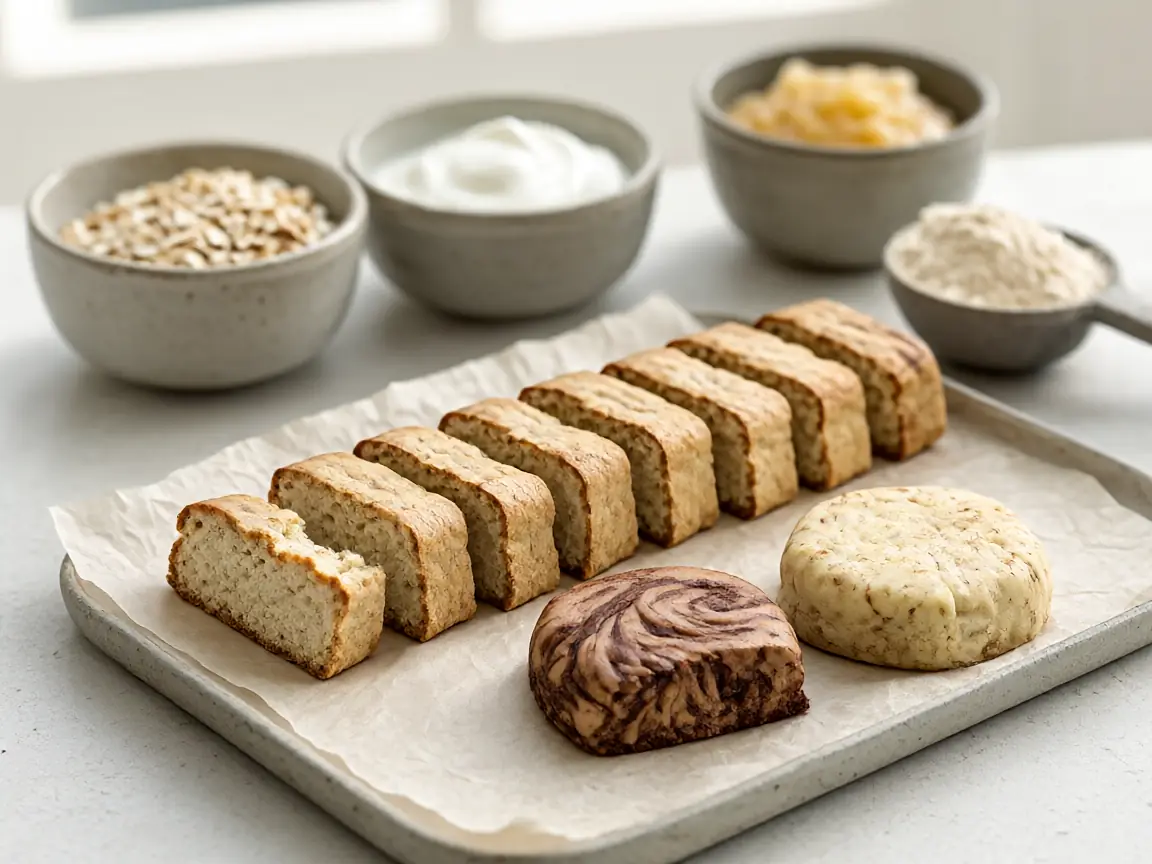
Primary keyword: banana cake high protein. This practical cake uses ripe bananas for moisture, Greek yogurt and eggs for structure, and a measured protein ingredient so the finished squares remain tender enough for breakfast or a planned snack.
Quick answer
A banana cake high protein works when the recipe balances banana moisture with enough flour or oats, eggs or yogurt, and a moderate amount of protein powder. The cake should be mixed gently, baked in a shallow pan, cooled completely, and cut into portions before adding any topping. Ripe bananas provide flavor and naturally occurring carbohydrate; yogurt, eggs, cottage cheese, tofu, milk, nuts, seeds, or protein powder provide the main protein contribution. The precise nutrition depends on the ingredients and serving size.
This is a cake-style food, not a prescription or a guarantee of weight loss, muscle gain, or fullness. A label such as “high protein” does not automatically mean low calorie or suitable for everyone. For more practical ideas, start with the high-protein recipes collection and choose a format that fits your day.
How banana cake differs from banana bread
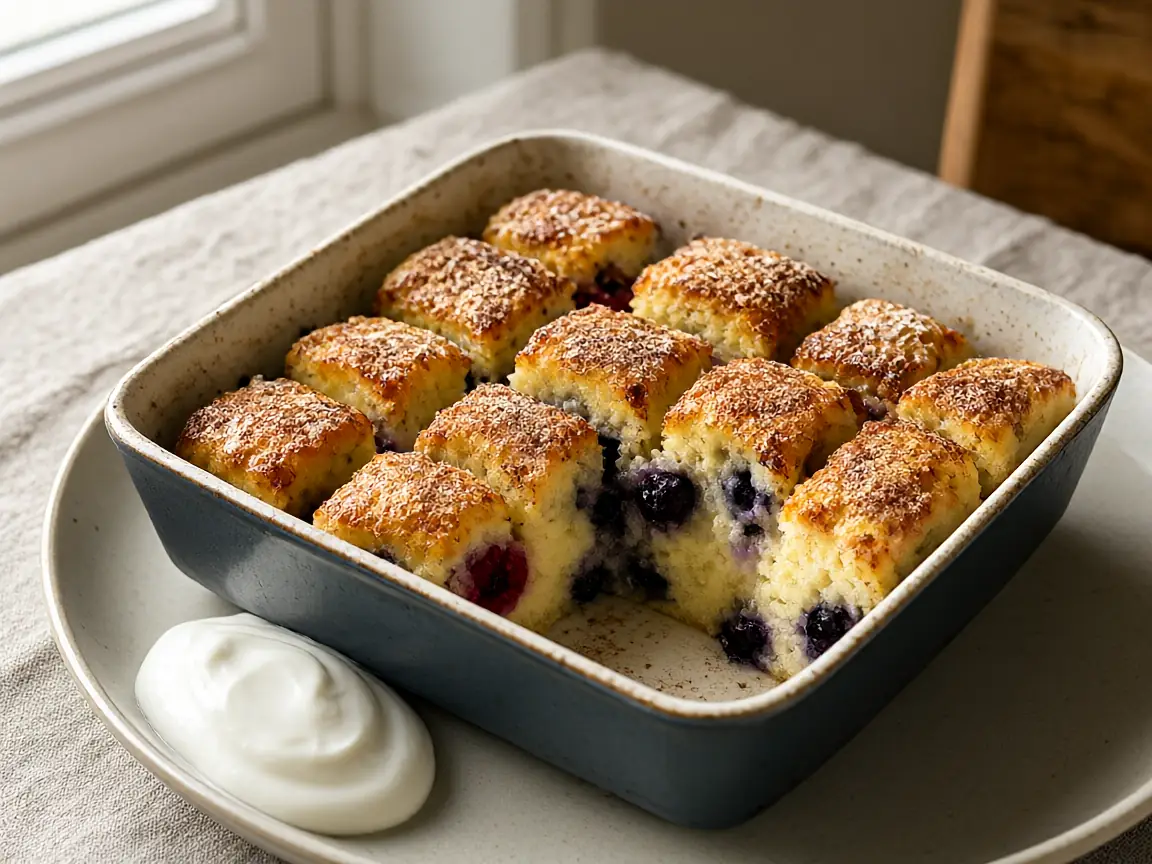
Banana bread is usually baked as a deep loaf and sliced. Banana cake is often baked in a shallower pan, cut into squares, and finished with a light topping. The difference is useful for meal preparation because a shallow cake cools faster and gives you more consistent portions. The same ingredients can be adjusted for either format, but a deep loaf needs more time for the center to set.
A higher-protein cake requires attention to moisture. Protein powder can absorb liquid and become firm with excess heat. Greek yogurt, mashed banana, eggs, and milk can soften the crumb, but too much wet ingredient can leave the center gummy. The goal is not to maximize the powder. It is to use enough protein-rich ingredients that the cake still tastes and feels like a cake.
The recipe can be made with dairy, soy, eggs, nuts, or seeds depending on personal preference and allergies. People with kidney disease, food allergies, pregnancy-related nutrition needs, diabetes, digestive conditions, or prescribed diets should consult a qualified professional before making major dietary changes.
A tender high-protein banana cake formula
This formula is designed for a lined 8-inch square pan and makes about 12 small squares. A different pan changes the thickness and bake time.
- 3 medium ripe bananas, mashed and measured.
- 2 large eggs, or an appropriate egg substitute.
- 3/4 cup plain Greek yogurt or plain soy yogurt.
- 1 cup oat flour or finely blended rolled oats.
- 1/2 cup protein powder that performs well in baked recipes.
- 1/2 cup all-purpose or whole-grain flour, adjusted for the texture you want.
- 1 teaspoon baking powder, 1/2 teaspoon baking soda, 1 teaspoon cinnamon, and a pinch of salt.
- 1 teaspoon vanilla extract.
- Optional: 1/3 cup chopped walnuts or pumpkin seeds, measured before adding.
Line the pan with parchment and heat the oven according to your equipment and recipe method. Mash the bananas until mostly smooth. Whisk in the eggs, yogurt, and vanilla. In a second bowl, combine the oat flour, flour, protein powder, baking powder, baking soda, cinnamon, and salt. Add the dry ingredients to the wet ingredients and fold just until no large dry pockets remain.
Let the batter stand for five minutes. The oats and protein powder absorb moisture as they rest. If the batter is too thick to spread, add a tablespoon of yogurt or milk. If it is loose and glossy, add a small amount of flour and wait again. Fold in the nuts or seeds, spread the batter evenly in the pan, and smooth the top.
Bake until the center is set and a skewer comes out with moist crumbs rather than wet batter. The exact time varies with banana size, pan material, oven calibration, and protein powder. Cool the cake in the pan briefly, then move it to a rack. Wait until it is cool before slicing or topping; the crumb becomes firmer as it loses steam.
Choosing the right bananas
Ripe bananas create the best cake flavor and tenderness. Very dark bananas may contain more moisture, so measure the mashed fruit rather than relying only on the number of bananas. If the fruit is small, the batter may be drier and less sweet. If the fruit is very large, hold some back until you see the batter consistency.
Lightly ripe bananas can work, but the cake may be less sweet and less soft. Add cinnamon, vanilla, cocoa, or citrus zest for flavor. Avoid adding a large amount of extra liquid to compensate because the banana also affects the structure. Frozen bananas can be thawed and used, but drain excess liquid if the fruit becomes watery.
Banana is not the only flavor. Applesauce can replace part of the banana and create a lighter fruit note, while pumpkin puree produces a different seasonal cake. These substitutions change sweetness and moisture, so use a small test batch and record the result.
Why yogurt and eggs matter
Greek yogurt contributes moisture, tang, and protein while helping the crumb stay tender. Plain soy yogurt can work for a dairy-free version, but the protein content varies widely by product. Cottage cheese can also be blended smooth and used in the wet mixture. The batter may need a small adjustment because different dairy products hold different amounts of water.
Eggs help the cake set and provide structure. If you use an egg substitute, read how it performs in baked foods. Some substitutes add moisture but do not create the same set. A cake with too much liquid can rise and then sink as it cools. Make a small batch before scaling a new substitute for a larger group.
Do not rely on protein powder to replace the function of yogurt and eggs. Protein powder can supply concentration, but it does not provide the same tenderizing or setting behavior. A combination of ingredients usually gives a more enjoyable result.
Protein powder and flour choices
Whey protein can produce a soft crumb but may become firm when overbaked. Plant protein powders may absorb more liquid and create a slightly grainier texture. Blended powders behave differently again. Check the serving size, protein amount, sweeteners, flavor, and allergens on the label. One scoop is not a standardized weight across brands.
Oat flour brings a tender, hearty character. Whole-grain flour adds structure and a more pronounced grain flavor. A mixture of oat flour and regular flour can create a lighter cake than using oats alone. If you need gluten-free food, choose ingredients that meet your required labeling and cross-contact standard.
Replacing all flour with protein powder is a common mistake. Starch helps the cake hold its shape, and excess protein can create a dry or rubbery crumb. Use a moderate amount, then adjust the moisture and bake time after you see how the brand performs.
A light topping and flavor variations
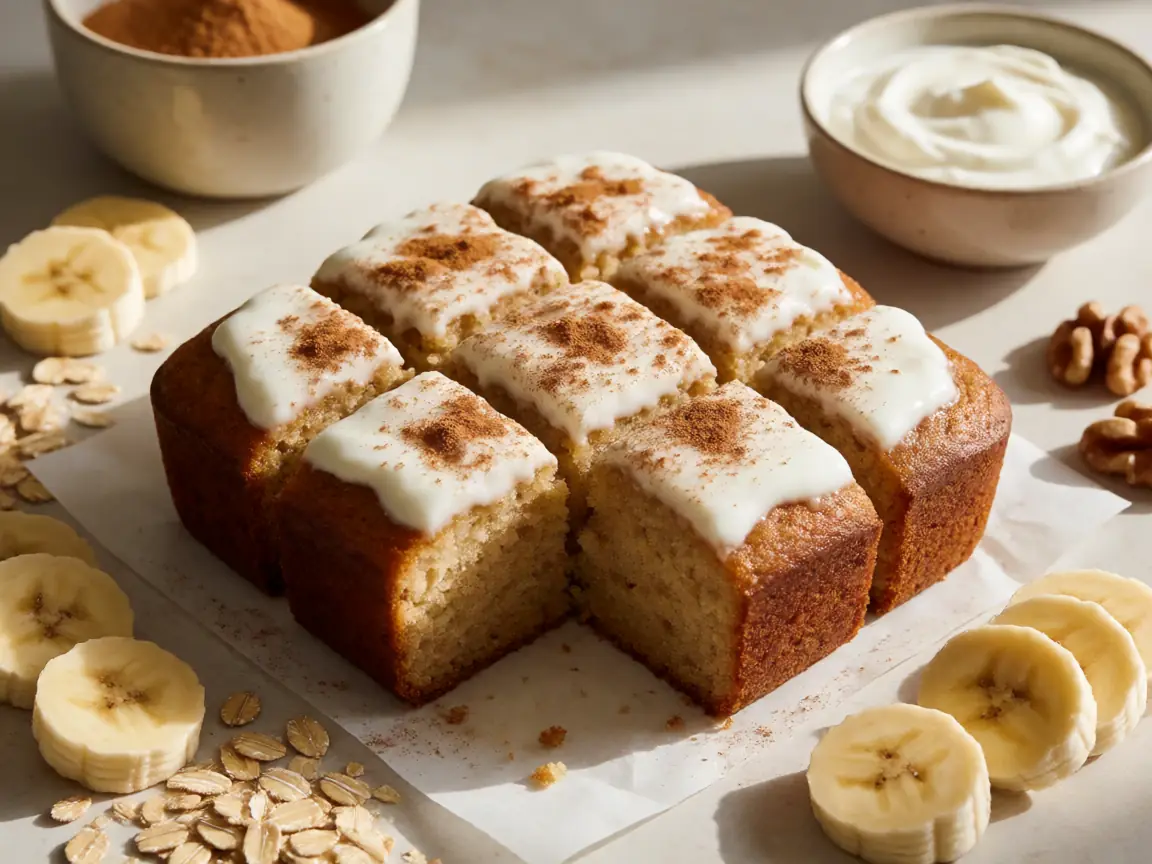
A cake-style finish can be simple: spread a thin layer of plain Greek yogurt mixed with vanilla and cinnamon after the cake has cooled. Keep the topping refrigerated and add it to individual squares if the cake will be stored for several days. A measured nut butter swirl, cocoa dusting, or a small amount of chopped walnuts can create contrast without covering the banana flavor.
For chocolate banana cake, replace a little flour with unsweetened cocoa and add vanilla. For cinnamon walnut cake, increase the cinnamon and use a measured amount of walnuts. For a peanut-butter version, swirl unsweetened peanut butter into the batter, but remember that it adds fat and energy and can make the crumb denser. For a berry version, fold in a small amount of berries coated lightly with flour.
Taste the batter before adding any sweetener. Ripe bananas and a sweetened protein powder may already provide enough sweetness. Cinnamon, vanilla, citrus zest, coffee, and a pinch of salt can make the flavor feel fuller without relying on more sugar. Describe the finished recipe based on what it actually contains.
How to prevent a dry or gummy cake
Mix only until the ingredients combine. Vigorous mixing can create a dense cake, especially when the flour contains gluten. Resting the batter for a few minutes helps the oats and protein powder hydrate before baking. Use a shallow pan when possible so the center sets before the edges dry.
If the cake is dry, the protein powder may be too absorbent, the bananas may have been small, or the cake may have baked too long. Add yogurt or milk next time, reduce the powder slightly, or start checking the center earlier. If the cake is gummy, it may be underbaked, too wet, sliced while hot, or made with unusually large bananas. Cool it completely before judging.
If the top browns early, cover it loosely near the end of baking while following safe oven practices. If the cake sinks, check the amount of leavener, avoid opening the oven repeatedly, and make sure the center is actually set. Write down the pan size, banana amount, and protein brand so the next adjustment is meaningful.
Portioning and nutrition estimates
Let the cake cool before dividing it into squares. Twelve small squares provide a convenient reference, but the appropriate portion depends on the meal and the person. Weigh the total batch when you need more consistency, then divide by the number of portions. Add the values from the actual bananas, eggs, yogurt, flour, protein powder, nuts, oil, and topping.
A cake made with one banana per three servings differs from a cake made with one banana per serving. Nuts and nut butter can change the energy quickly even when the squares look small. A high-protein label does not erase the rest of the nutrition. Use the estimate to understand how the cake fits into the day, not to assign a moral score to the food.
One square may be a snack. Two squares with yogurt and fruit may be a breakfast for one person and too much for another. Consider hunger, activity, the next meal, and any professional plan. Use a clinician or dietitian’s calculation method when medical precision matters.
Storage and meal preparation
Cool the cake completely before storing it. Put parchment between squares in a sealed container. If the cake contains yogurt, fresh fruit, or other perishable toppings, refrigerate it promptly and follow local food-safety guidance. Add toppings close to serving when that protects texture.
Individual squares can be frozen. Wrap them separately, label the date, and thaw only the amount you plan to eat. A short gentle warm-up may restore softness, but excessive heating can make protein-rich cake firm. Add yogurt or fruit after thawing instead of freezing the topping with the cake.
For a two-day prep, bake one small pan, keep half the squares refrigerated, and freeze the rest if you will not use them in the preferred storage window. This reduces waste and keeps the texture more appealing than holding the entire batch for too long.
How the cake fits into a high-protein day
Banana cake can be part of breakfast, a snack, or a portable food. It does not need to carry the entire meal. Pair it with plain yogurt, cottage cheese, milk, eggs, fruit, or another food that suits your hunger and preferences. A cake square may be ideal between meals but insufficient after a long morning.
If you are preparing several breakfast options, make the cake one format and use muffins, overnight oats, or a bowl on other days. The high-protein breakfast muffin guide uses related ingredients but provides different portions and a different texture. A small rotation helps prevent one recipe from becoming tiring.
If you need a larger meal, use a plate structure rather than making the cake bigger. The 800 calories high protein meal guide shows how to combine a protein anchor, vegetables, carbohydrate, and sauce. A dessert-like food can fit a meal pattern without being presented as the entire solution.
Substitutions for allergies and preferences
Use plain soy yogurt or blended tofu for dairy-free baking, checking the protein label. Replace walnuts with pumpkin seeds or sunflower seeds when appropriate. If nuts are an allergy concern, inspect the protein powder, oats, chocolate, and facility statement for cross-contact. Use an egg substitute only after considering how it sets.
For less sweetness, use slightly less ripe bananas and more cinnamon or vanilla. For a richer cake, a measured amount of nut butter can add flavor, but it also makes the batter denser. For a lighter crumb, use a mixture of oat flour and regular flour. Every change affects moisture, structure, cost, or storage, so test one major substitution at a time.
For a gluten-free requirement, select appropriately labeled oats and flour. For a medically restricted diet, follow the individual’s professional plan rather than relying on a general recipe. Flexible cooking is not the same as universal safety.
Common mistakes to avoid
Adding too much protein powder is the most common mistake. It can make the cake dry even when the batter looks moist. Another mistake is ignoring banana size. A third is slicing while the cake is hot. A fourth is adding unmeasured nuts, oil, chocolate, or topping and then assuming the original estimate still applies.
Do not compare this cake directly with a packaged protein bar as though both serve the same purpose. A cake is a baked food with a particular crumb and storage pattern. A packaged bar may be designed for portability and use different sweeteners. Compare how each food fits the person’s day.
Finally, do not promise that the cake will cause weight loss, increase muscle, cure a condition, or replace individualized care. Practical food guidance is enough; unsupported promises make the recipe less trustworthy.
Related recipe and protein guides
For a loaf-style banana bake, read the high-protein banana bread recipe. For bowls and meal-prep formats, see the high-protein bowl recipes guide. The protein and fiber guide can help you plan a side that adds variety and texture.
Frequently asked questions
Can I make banana cake high protein without protein powder?
Yes. Use Greek yogurt, cottage cheese, eggs, milk, tofu, nuts, or seeds, then recalculate the serving. The cake may be less concentrated in protein and may need a different flour or liquid balance.
Why is my protein banana cake rubbery?
Too much protein powder, overmixing, overbaking, or an unusually absorbent powder can create a rubbery crumb. Reduce the powder, add moisture gradually, mix less, and start checking the center earlier.
Can I use frozen bananas?
Yes. Thaw them, measure the mashed fruit, and drain excess liquid if needed. Frozen bananas can make the batter wetter, so adjust the flour or yogurt gradually rather than adding a large amount at once.
How do I keep the cake moist?
Use ripe measured bananas, Greek yogurt, moderate protein powder, a shallow pan, and careful baking. Cool the cake fully before storing it in a sealed container. Add toppings close to serving.
How many squares are in a serving?
That depends on the pan and the person. Divide the finished cake into a number that matches your meal plan, then adjust with yogurt, fruit, or another side when one square is not enough.
Does high-protein banana cake guarantee weight loss?
No. A higher-protein cake can fit a practical eating pattern, but no food guarantees weight loss, muscle gain, fullness, or a medical outcome. Total intake, activity, sleep, stress, health conditions, medications, and individual needs all matter.
Editorial and safety note
This article provides general food and nutrition education, not individualized medical, dietetic, or weight-management advice. Nutrition values vary with brands, weights, ripeness, cooking methods, and serving size. Read allergy statements, follow safe food-handling practices, and consult a qualified professional for allergies, pregnancy-related nutrition needs, kidney disease, diabetes, medication questions, or eating-related distress. See our editorial policy and disclaimer for the limits of this content.