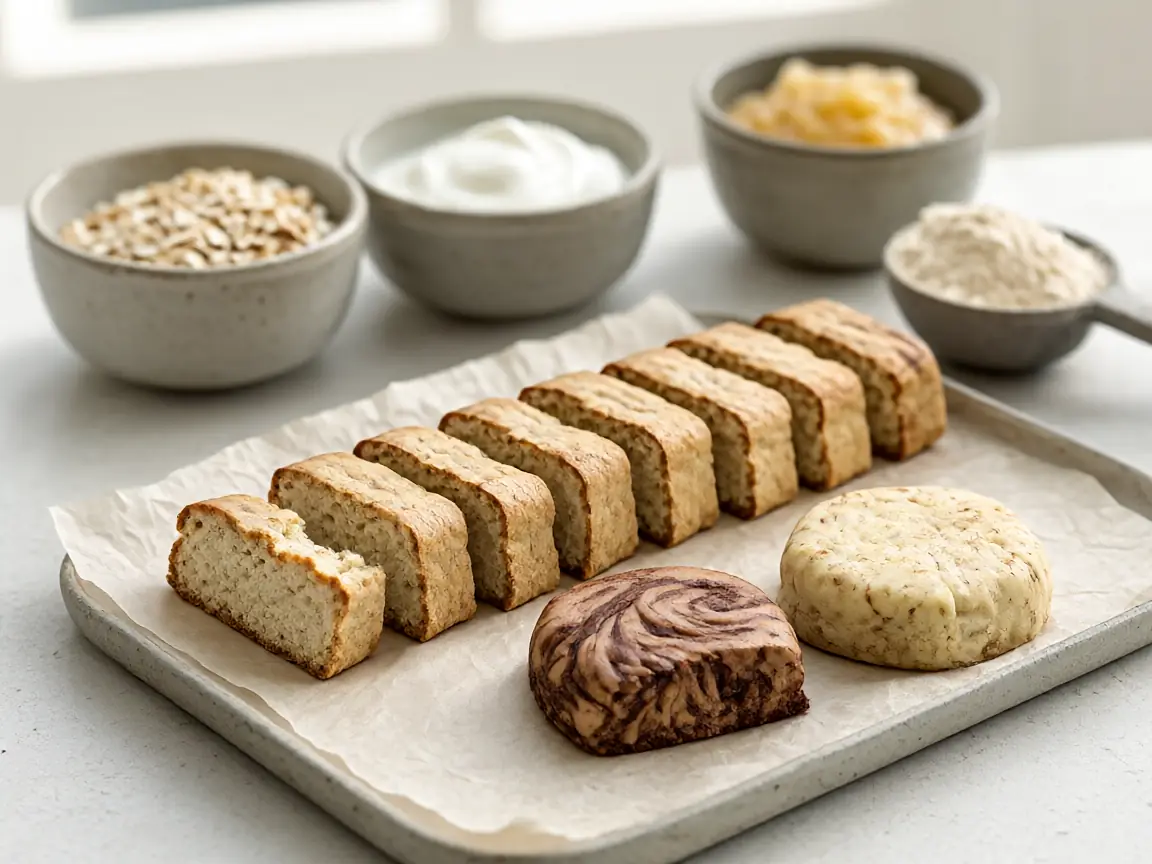
High-protein bread pudding with a tender custard center
This high-protein bread pudding turns day-old bread, cottage cheese, eggs, and milk into a soft baked breakfast or dessert with browned edges and a custardy middle. Blending the cottage cheese into the egg mixture distributes it evenly, so the finished pudding tastes creamy rather than having noticeable curds. Berries, cinnamon, and vanilla add flavor without making the dish complicated. The result is a comforting casserole that can be portioned for a family breakfast or prepared ahead for several meals.
The recipe does not promise a fixed protein or calorie number. Bread, cottage cheese, milk, egg size, serving size, and optional toppings all change the nutrition. If you need an estimate, use the labels and weights for the ingredients you actually use, then divide by the portions you cut. This is general cooking information, not individualized nutrition advice; people with allergies, medical diets, or other specific needs should choose ingredients with suitable professional guidance.
Recipe at a glance
- Yield: one 8-inch square baking dish, about 6 to 8 portions
- Preparation: about 20 minutes, plus soaking time
- Baking: approximately 40 to 55 minutes, depending on the bread and dish
- Texture: golden edges, a set top, and a moist but not liquid center
- Equipment: blender, mixing bowl, whisk, and oven-safe baking dish
Timing is a guide because bread dryness, dish material, oven calibration, and the depth of the mixture differ. Leave time for the custard to soak into the bread and for the baked pudding to rest before serving.
Ingredients for one small casserole
- 8 cups (about 350 to 400 g) day-old bread cubes, cut into roughly 1-inch pieces
- 1 1/2 cups plain cottage cheese
- 1 cup milk
- 3 large eggs
- 2 large egg whites
- 2 tablespoons maple syrup or sugar, optional and adjustable
- 2 teaspoons vanilla extract
- 1 teaspoon ground cinnamon
- 1/8 teaspoon fine salt
- 1 cup fresh or frozen berries, optional
- Nonstick spray or a little butter for the baking dish
Choose a bread you enjoy. A sturdy whole-grain loaf gives a chewy result, while a soft sandwich bread makes a more delicate pudding. Unsweetened bread lets you control the sweetness. If the bread is very fresh, dry the cubes on a baking sheet in a low oven until they feel dry on the surface but have not browned. Frozen berries can be used without thawing; they may color the custard slightly.
Blend the cottage-cheese custard
Heat the oven to 350°F (175°C). Lightly grease an 8-inch square baking dish. Put the cottage cheese, milk, eggs, egg whites, maple syrup or sugar if using, vanilla, cinnamon, and salt in a blender. Blend until smooth, stopping once to scrape down the sides if cottage cheese remains around the blade. The mixture should pour easily. If you do not have a blender, press the cottage cheese through a fine sieve and whisk it thoroughly with the remaining ingredients; the texture may be a little less uniform.
Place the bread cubes in a large bowl. Pour the custard over them and turn gently with a spatula so the dry surfaces are coated. Let the mixture stand for 15 to 20 minutes, folding once or twice. The bread should absorb much of the liquid while still holding its shape. If the cubes remain dry after soaking, add milk a tablespoon at a time. If the mixture looks soupy, give it a few more minutes before adding anything else; bread type and age affect absorption.
Assemble and bake until set
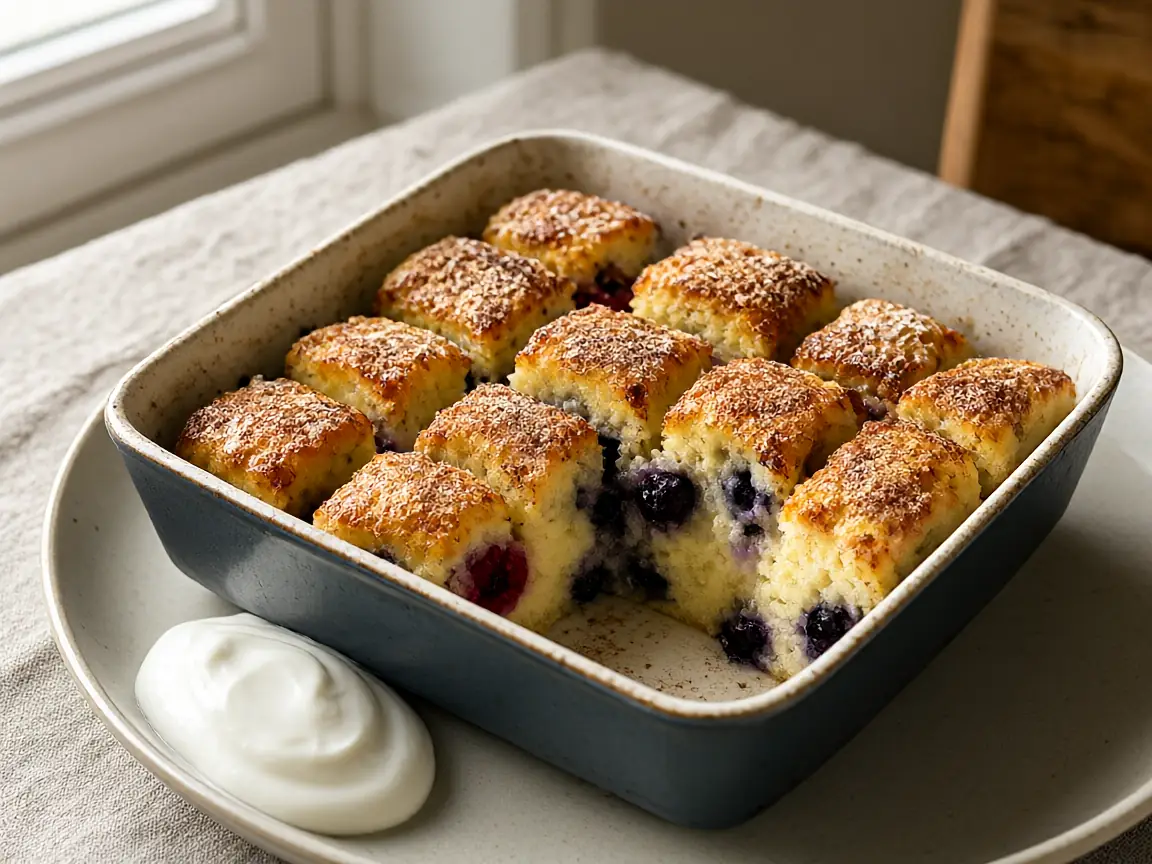
Fold the berries through the soaked bread, reserving a few to scatter on top if desired. Transfer everything to the prepared dish and spread it into an even layer. Press lightly so the bread makes contact with the custard, but do not mash the cubes into a paste. If the top is already very wet, leave a few bread points exposed; they will brown and provide a pleasant contrast to the softer center.
Bake for about 40 to 55 minutes. Start checking around 40 minutes: the top should be golden, the center should no longer ripple like liquid, and a thermometer inserted into the middle should read 160°F (71°C) for this egg dish. If the surface browns before the center is set, cover the dish loosely with foil and continue baking. FoodSafety.gov lists 160°F (71°C) as the safe minimum internal temperature for egg dishes; use a food thermometer rather than relying on color alone. See its safe temperature chart for details.
Let the dish rest for at least 10 minutes before cutting. The custard continues to firm as it cools, and resting makes neat portions easier. A very hot portion may seem looser than it will after resting. Serve warm, or cool completely if you plan to portion it for later.
Ways to improve the texture
If the center is wet
Wet bread pudding usually needs more baking time, a longer soak, or drier bread. Return it to the oven in short intervals and check the center temperature. For the next batch, dry fresh bread cubes first and give the custard time to soak in. Avoid adding extra milk before you know whether the bread will absorb what is already in the bowl.
If it turns out dry
Dryness may come from a long bake, very small bread cubes, or bread that was unusually dry and did not receive enough custard. Check earlier next time and add a tablespoon or two of milk only if the cubes remain dry after resting. Covering the dish for part of baking can protect the surface, but uncover it near the end to brown the top.
If cottage-cheese specks remain
Blend longer and scrape the sides of the blender. Some cottage cheese is firmer or has larger curds than others. If a blender is unavailable, sieve the cheese before whisking. Small flecks are harmless to texture for many people, but a smoother custard gives the most even result.
If the top is pale
Check that the oven was fully heated and that the dish is not covered throughout baking. A little exposed bread can brown more readily than a fully submerged cube. If the center has reached a safe temperature but the top remains pale, use the oven's broiler briefly while watching closely; do not leave the dish unattended.
Ingredient swaps that keep the recipe workable
Bread choices
Sturdy sandwich bread, whole-grain bread, sourdough, or a day-old country loaf can all work. Dense bread may need a longer soak than soft white bread. Very sweet enriched bread can make the casserole sweeter, so reduce the added syrup or sugar. Gluten-free bread varies widely in absorbency; begin with the listed liquid and adjust only after it has rested.
Dairy options
Plain cottage cheese is the main dairy ingredient that contributes a creamy base. Reduced-fat or full-fat versions can be used, but moisture and salt levels differ. Milk can be dairy or an unsweetened alternative that suits the cook, though flavor and nutrition will change. If avoiding dairy, use an appropriate cottage-cheese alternative if available and check that its texture blends smoothly; the result will not be identical.
Sweeteners and flavor
Maple syrup or sugar is optional. Ripe berries, vanilla, cinnamon, orange zest, or a few raisins can add sweetness or aroma. Taste the custard before mixing it with the bread and adjust gently. Cocoa, nutmeg, cardamom, or lemon zest can create a different flavor without changing the method. Sweetened milk or flavored cottage cheese will alter the final result, so check labels before adding extra sweetener.
Fruit and add-ins
Blueberries, raspberries, chopped apples, or diced pears can be folded through the bread. Firm fruit may be better diced small so it softens during baking. Nuts add crunch but can change serving energy and may be unsuitable for allergies; they are optional. Keep add-ins moderate so there is enough custard to bind the bread and the casserole still slices cleanly.
How to serve the bread pudding
Serve a warm square with plain Greek yogurt, berries, or a little milk. A small spoonful of yogurt adds a cool contrast to the cinnamon custard. For dessert, a light dusting of cinnamon or a few fresh berries may be enough. If you prefer a sweeter finish, add syrup at the table so each person can choose how much they want rather than sweetening the entire dish heavily.
For breakfast, pair a portion with fruit or another food that suits your appetite. For a snack, cut smaller pieces and refrigerate them for later. The recipe is not restricted to a particular meal or eating schedule. Portion size depends on hunger, the rest of the meal, and personal needs; the yield range is provided to help the cook plan, not to prescribe how much anyone should eat.
Protein and portion notes
Cottage cheese, eggs, egg whites, milk, and bread all contribute to the dish, but the amount per serving changes with brands, loaf size, and the number of portions. The phrase “high protein” should not be read as a guaranteed figure for every slice. To estimate, record the package values for each ingredient, weigh the amounts used, sum the recipe, and divide by the number of equal portions you actually serve. If precise nutrition information matters for a medical condition, ask a qualified professional to help interpret it.
You can select bread with more protein if it fits your taste, but products vary in fiber, sodium, texture, and serving size. Do not assume a product's front label describes the entire meal. Compare the Nutrition Facts panel and ingredient list, and consider what you plan to serve alongside the pudding. The protein foods section includes broader ingredient-focused guidance.
For another make-ahead breakfast, browse our high-protein breakfast muffin. The banana pudding recipe is a chilled spoonable dessert with a different texture and method. Our meal-prep guide offers ideas for building a wider routine, and the recipe collection has additional formats.
Make-ahead, storage, and reheating
For overnight preparation, assemble the bread and custard in the baking dish, cover it, and refrigerate it rather than leaving the mixture at room temperature. Bake the next day until the center reaches 160°F (71°C); a cold dish may need additional time, so rely on temperature and doneness rather than the original timing alone. Alternatively, bake the casserole, cool it, and portion it once it is no longer hot.
Refrigerate leftovers promptly in a covered, shallow container. FoodSafety.gov advises keeping a refrigerator at 40°F (4°C) or below and lists three to four days for many cooked leftovers. Reheat portions until steaming hot throughout; its guidance lists 165°F (74°C) for leftovers. See the cold food storage chart and follow local food-safety guidance. Freeze portions you will not use within the recommended refrigerated window; texture may soften after thawing.
To reheat one portion, use a microwave in short intervals or a moderate oven until hot throughout. Cover loosely to keep it from drying, then uncover briefly if you want to refresh the top. Add yogurt or fresh berries after heating. Avoid reheating the entire casserole repeatedly; portioning what you need helps maintain quality and makes cooling and storage easier to manage.
Frequently asked questions
Can I use fresh bread?
Yes. Fresh bread can be dried in a low oven first so it absorbs the custard without collapsing. If it is very soft, cut larger cubes and handle them gently. The goal is bread that is dry enough to take up liquid but still holds its shape.
Can I make it without a blender?
Yes. Press the cottage cheese through a sieve or mash it very thoroughly, then whisk it with the eggs and milk. The custard may retain small curds, but the recipe will still bake. Mix until the liquid looks evenly combined before pouring it over the bread.
Can I add protein powder?
It is possible, but powder absorbs liquid and can make a baked custard dry, chalky, or rubbery. This version is designed around cottage cheese and eggs and does not require powder. If experimenting, change only a small amount at a time, add moisture cautiously, and treat the nutrition estimate as a new recipe based on the product label.
Why did the center fall after baking?
A small amount of settling is normal as steam escapes and the custard cools. A large collapse may mean the center was underbaked, the dish contained excess liquid, or it was cut while very hot. Verify the internal temperature, let it rest, and measure liquid carefully on the next batch.
Can I bake individual portions?
Yes. Divide the soaked bread among greased ramekins, leaving room for expansion. Smaller dishes usually bake faster, so begin checking early and verify that each portion reaches the safe internal temperature. Baking times vary with the size and material of the ramekins.
Final recipe recap
Blend cottage cheese with milk, eggs, egg whites, vanilla, cinnamon, salt, and optional sweetener. Pour it over day-old bread cubes and let them soak. Fold in berries, transfer to a greased dish, and bake at 350°F (175°C) until golden and set, with the center at 160°F (71°C). Rest before cutting. Adjust soaking time for the bread you use, check temperatures with a thermometer, and refrigerate leftovers promptly. The result is a tender, make-ahead bread pudding whose portions and nutrition can be adapted to the ingredients and appetite at your table.