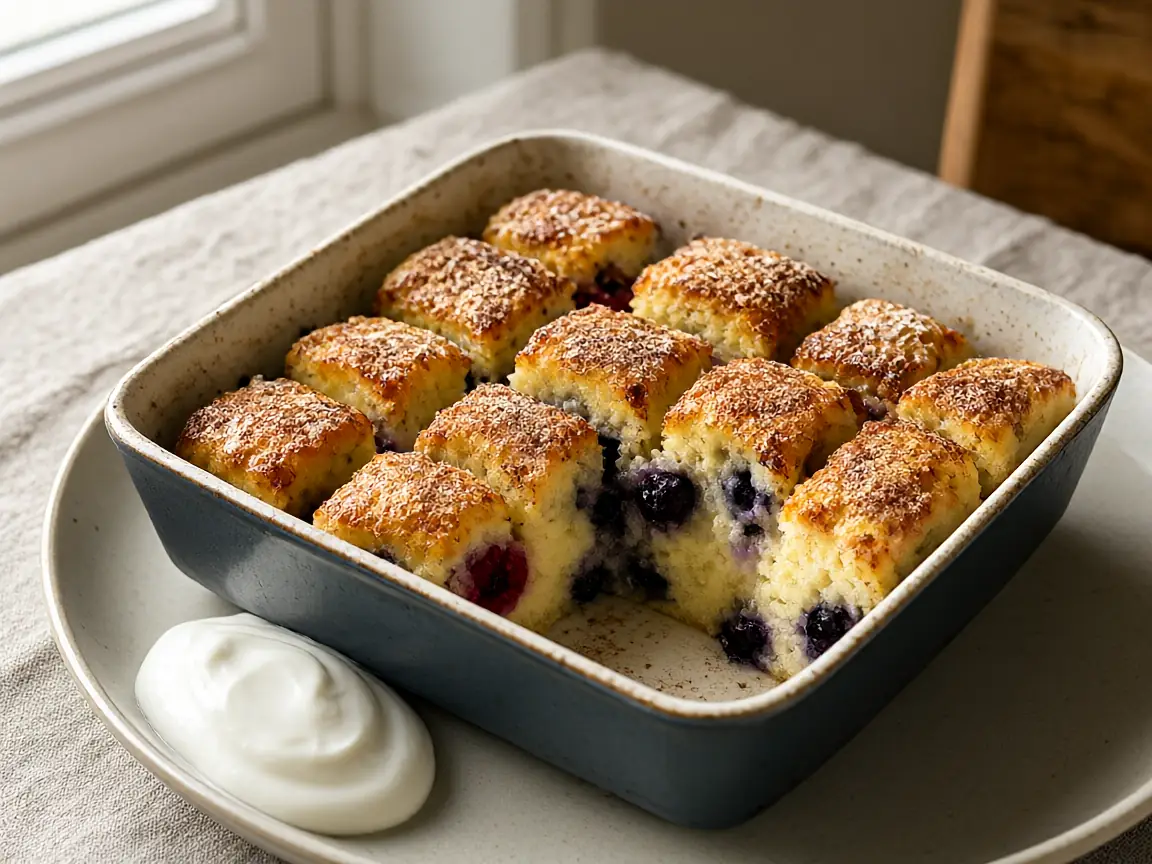
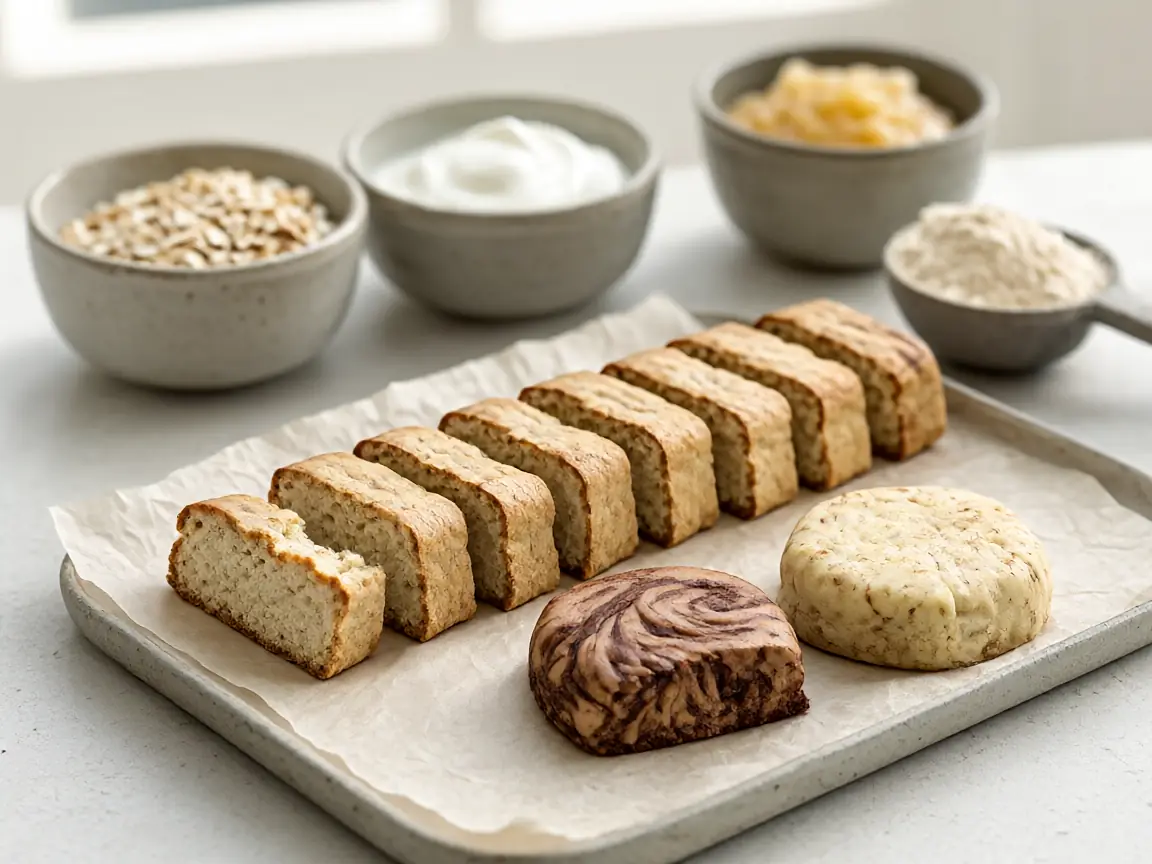
High protein biscuits with a tender cottage cheese crumb
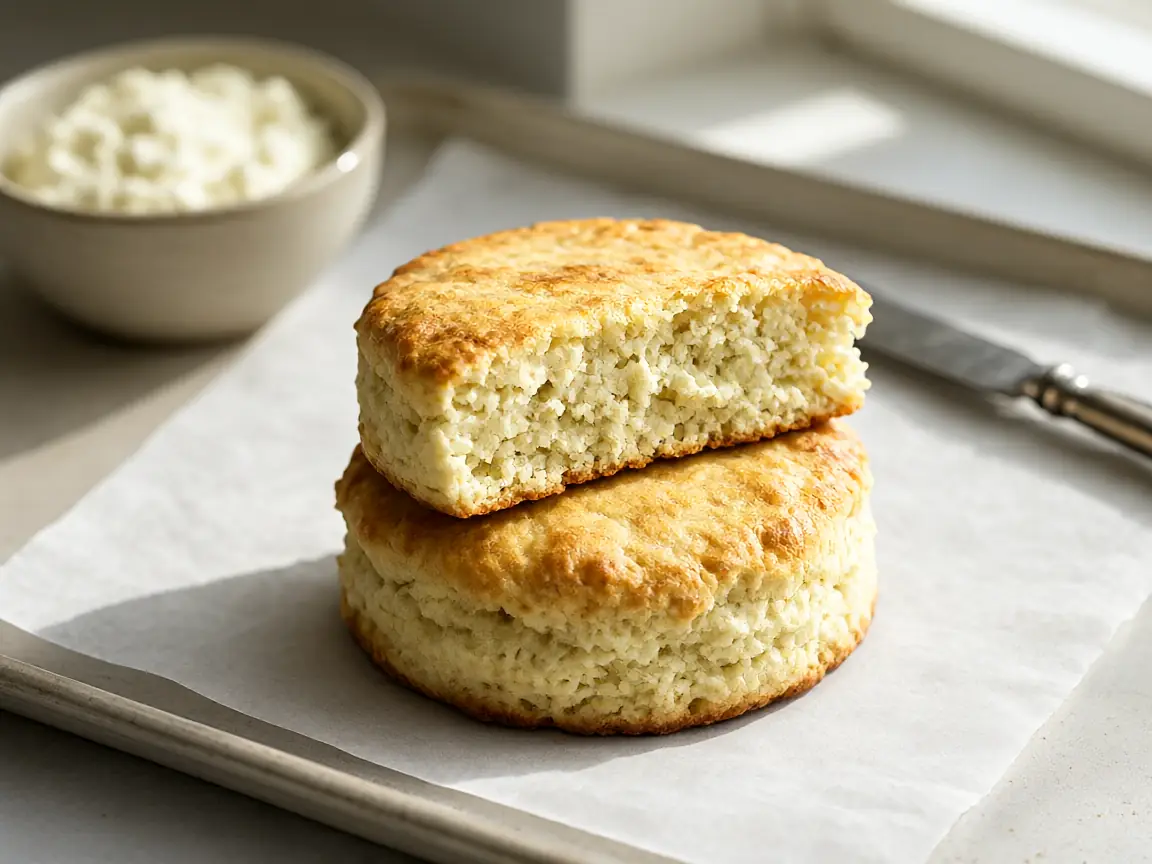
This high protein biscuit recipe uses blended cottage cheese and an egg in a simple flour dough to make soft, golden biscuits with a tender center. Cold butter creates small pockets of richness, while baking powder gives the dough lift. The cottage cheese is blended until smooth so it adds moisture without leaving large curds in the finished crumb. These are home-style biscuits rather than laminated pastry: they are sturdy enough to split for breakfast or serve beside soup, and they are easiest to handle when the dough stays cool and is mixed only until combined.
Protein amounts vary by cottage cheese, flour, egg size, biscuit size, and how many portions you cut. This article does not promise a fixed nutrition number. If exact protein or calories matter, weigh the ingredients, use the labels for your products, and divide the batch into equal biscuits. The recipe is general cooking information; it is not a substitute for individualized nutrition advice.
Ingredients for eight biscuits
Measure 2 1/2 cups all-purpose flour, plus a little extra for the counter; 1 tablespoon baking powder; 1/2 teaspoon fine salt; 4 tablespoons cold unsalted butter cut into small cubes; 1 cup cottage cheese; 1 large egg; and 1 to 3 tablespoons cold milk only if needed. For a golden top, brush with a little milk. Optional additions include 1 teaspoon dried chives, a pinch of black pepper, or 2 tablespoons finely shredded cheddar. Keep add-ins modest so the dough can still rise and the biscuits remain easy to cut.
Use plain cottage cheese rather than a sweetened or flavored product. Full-fat and reduced-fat varieties can both work, though moisture levels differ. If the cottage cheese seems watery, drain it briefly before blending. If you need a gluten-free version, use a tested gluten-free baking blend designed for biscuits; a direct one-for-one swap with almond or coconut flour will not behave the same way. Read labels carefully for dairy, egg, and gluten requirements.
Blend the cottage cheese and prepare the oven
Heat the oven to 425°F (220°C). Line a baking sheet with parchment or use an ungreased cast-iron skillet. Blend the cottage cheese until mostly smooth, scraping down the sides if needed. It should be thick and creamy, not watery. Whisk in the egg until combined. Keep this mixture cool while you prepare the dry ingredients; cold dough and butter help the biscuits hold their shape as they go into the oven.
In a large bowl, whisk the flour, baking powder, salt, and any dry herbs. Add the cold butter cubes. Use your fingertips, a pastry cutter, or two forks to rub the butter into the flour until the pieces are mostly pea-sized, with a few smaller flakes. Work quickly so the butter does not melt from your hands. These uneven butter pieces are useful: they make the crumb more tender and prevent the biscuits from becoming uniformly dense.
Make a well in the center and pour in the cottage cheese mixture. Fold with a fork or flexible spatula just until a shaggy dough forms. If there are dry flour pockets, add cold milk one teaspoon at a time. The dough should hold together when pressed but may remain slightly tacky. Avoid kneading it like bread. Excess mixing develops gluten and can make biscuits tough, while adding too much milk may cause them to spread instead of rise.
Fold, cut, and bake
Turn the dough onto a lightly floured surface. Pat it into a rectangle about 3/4 inch thick. Fold one third of the dough toward the center, then fold the opposite third over it, like a letter. Rotate the dough a quarter turn and gently pat it back to the same thickness. Repeat this fold once more if the dough remains cool and manageable. Folding creates a few layers without the time-consuming rolling required for laminated pastry.
Pat the dough to about 3/4 to 1 inch thick. Cut straight down with a floured 2 1/2-inch biscuit cutter; do not twist the cutter, because twisting can seal the edges and limit the rise. Gather scraps gently and cut again, understanding that the last biscuits may be slightly less tender. Place biscuits close together on the baking sheet if you prefer soft sides, or farther apart for more browned edges. Brush tops lightly with milk if you want a deeper golden finish.
Bake for about 12 to 16 minutes, checking near the lower end. The tops should be lightly golden and the sides set. Oven temperatures and biscuit sizes vary, so use appearance and a fully baked center rather than relying only on the clock. Let them rest on the sheet for several minutes before splitting. If you cut immediately, steam escapes quickly and the warm crumb may seem gummy even when properly baked.
Serve warm with eggs, soup, or a savory filling. The biscuits are flavorful enough to eat plain, but a small amount of butter, jam, or a spoonful of Greek yogurt can be added at the table. If serving them with a salty stew or cheese, taste before adding extra salt to the dough next time. Cottage cheese products vary in saltiness.
Recipe snapshot
- Yield: 8 biscuits
- Active preparation: about 20 minutes
- Baking: about 12 to 16 minutes
- Texture: tender, lightly layered, and sturdy enough to split
- Equipment: blender, mixing bowl, baking sheet, biscuit cutter
These times are practical estimates. A warm kitchen softens butter faster, a thick dough may bake more slowly, and biscuit cutters vary in diameter. If your cutter is larger, expect fewer biscuits and a longer bake; if smaller, begin checking earlier. Consistent thickness matters more than an exact cutter size.
How cottage cheese changes the dough
Blended cottage cheese contributes moisture and dairy protein while replacing some of the liquid often used in biscuit dough. It also gives the crumb a gentle tang. Because cottage cheese brands differ in moisture and curd size, the dough may need a small amount of milk or an extra dusting of flour. Make adjustments gradually. A sticky dough is easier to correct with a little flour on the counter than a dry dough is to rescue after too much flour has been mixed in.
Blending is important for a uniform texture. Large curds can leave wet pockets that do not match the surrounding crumb. A food processor or small blender makes quick work of the filling. If you do not have one, press the cottage cheese through a fine sieve and whisk it with the egg. The mixture does not need to be perfectly glossy, but it should not contain large lumps.
The cottage cheese is not a direct substitute for every traditional biscuit ingredient. It adds moisture but does not create the same fat structure as extra butter. The recipe therefore uses a modest amount of cold butter for tenderness. Reducing it further may make the biscuits less flaky; increasing it can make the dough richer and more delicate. Change one ingredient at a time if you are adapting the recipe.
Ingredient choices and substitutions
Flour
All-purpose flour gives a familiar biscuit texture. Measuring by weight is more consistent than scooping, because a packed cup can contain substantially more flour than a lightly filled cup. If measuring by volume, fluff the flour, spoon it into the cup, and level the top. Add only enough extra flour to keep the dough workable; too much makes the crumb dry.
Butter
Use cold butter cut into small pieces. If you only have salted butter, reduce the added salt slightly and taste the dough mixture as appropriate. A plant-based butter may work, but water content and firmness differ by brand. Keep it cold and expect to adjust the flour lightly. Oil is not a direct substitute because it does not form the same small solid pieces in the dough.
Egg
The egg helps bind the cottage cheese mixture and contributes structure. Replacing it can change the texture, so use an egg-replacement product intended for baking and follow its package directions. Do not assume a flax mixture will produce identical layers or rise. If serving someone with an egg allergy, prevent cross-contact and check the labels on all ingredients.
Seasonings and add-ins
Chives, black pepper, garlic powder, or a small amount of grated cheddar make savory biscuits. Add dry seasonings to the flour so they distribute evenly. Fold cheese in at the end to avoid smearing it through the dough. For a slightly sweet biscuit, use cinnamon and a small amount of sugar, but keep the addition modest so the dough does not become sticky.
Texture fixes
The dough is too sticky
Dust the counter and your hands lightly with flour, then pat rather than knead. If the dough is extremely sticky, sprinkle one tablespoon of flour over it and fold once. Repeat only if necessary. Chilling the dough for 10 to 15 minutes can firm the butter and make cutting easier, but avoid chilling so long that the dough becomes hard to roll.
The biscuits did not rise
Check that the baking powder is fresh and that the oven was fully preheated. Patting the dough too thin, twisting the cutter, or overworking the scraps can also reduce height. Cut with a straight downward motion and place the biscuits in the oven promptly so the leavening starts in a hot environment.
The centers are gummy
The biscuits may need a few more minutes, may be too thick, or may have been cut open while very hot. Return underbaked biscuits to the oven briefly and check again. For the next batch, use an even thickness and cool them for several minutes before splitting. Cottage cheese dough can retain more moisture than a very lean flour-and-milk dough.
The crumb is tough
Overmixing and excess flour are common causes. Stir only until the shaggy dough forms, fold gently, and avoid pressing hard with the cutter. Measure flour carefully and do not keep kneading the scraps. The final biscuits should feel soft, not elastic.
Portion and nutrition notes
The cottage cheese and egg contribute protein, while flour, butter, and any cheese or toppings contribute additional energy and nutrients. The amount per biscuit depends on the brands, weights, and yield. If you need a useful estimate, weigh each ingredient, record the nutrition label values, and divide the total by the number of evenly sized biscuits. A larger biscuit contains more of the recipe than a small one.
“High protein” should not be read as a precise numerical promise for every serving. Some cottage cheese products have more protein than others, and the recipe's eight biscuits may vary in size. Avoid comparing a homemade biscuit to a packaged product without matching serving weights and label definitions. If a specific protein target is important for medical reasons, consult a registered dietitian or clinician who can account for your individual needs.
For more ideas, browse the high-protein recipe collection, including our high-protein breakfast muffin. The protein foods section offers ingredient-focused guidance, and the meal-prep guides cover planning and storage for other foods.
Serving and make-ahead ideas
Split a biscuit and fill it with scrambled eggs, sliced tomato, or leftover cooked meat. For a lighter accompaniment, serve one beside vegetable soup or a bean stew. Keep toppings modest if you want the biscuit itself to remain the main flavor. Because the biscuits are sturdy, they can also be broken into a bowl and topped with a savory sauce, though they will soften as they absorb liquid.
To prepare ahead, mix the dry ingredients and keep them covered, then cut in cold butter and add the cottage cheese mixture shortly before baking. You can also cut the biscuits and chill them briefly on the tray while the oven heats. If freezing unbaked biscuits, place them on a tray until firm, then transfer them to a freezer-safe container. Bake from frozen with additional time, checking the centers before serving.
For baked leftovers, cool them and store in a sealed container. Since the dough contains cottage cheese and egg, refrigerate leftovers rather than leaving them out for an extended time. FoodSafety.gov's cold-storage guidance recommends keeping a refrigerator at 40°F (4°C) or below and gives three to four days for many cooked leftovers. See the FoodSafety.gov cold-storage chart for details. Rewarm in a low oven or toaster oven to refresh the outside; microwaving is quicker but can make the crumb softer.
Frequently asked questions
Can I use Greek yogurt instead of cottage cheese?
It may work as a variation, but the moisture and thickness differ. Start with slightly less yogurt, blend or whisk it with the egg, and add only enough liquid to bring the flour together. The flavor and protein amount will change.
Can I add protein powder?
You can experiment with a small amount, but powder absorbs moisture and can make biscuits dry or chalky. Replace only part of the flour by weight, add liquid gradually, and expect the texture to change. Calculate nutrition from the exact product label rather than assuming a scoop adds a fixed amount to each biscuit.
Why blend the cottage cheese?
Blending distributes the curds and moisture evenly. Large curds can create uneven wet spots in the crumb. If a blender is unavailable, press the cheese through a sieve and whisk it with the egg.
Can I make smaller biscuits?
Yes. Use a smaller cutter and begin checking earlier, since small pieces bake faster. More biscuits per batch also means less of the recipe in each portion, so recalculate nutrition based on the actual yield.
How do I know they are done?
The tops should be lightly golden, the sides set, and the center should no longer look wet. If you are uncertain, break one open after a brief rest. Oven and pan differences make visual cues more reliable than one exact baking time.
Final method recap
Blend cottage cheese with an egg. Whisk flour, baking powder, and salt, then cut in cold butter until small pieces remain. Fold the wet mixture into the dry ingredients just until a shaggy dough forms. Pat, fold gently, and cut without twisting. Bake at 425°F (220°C) until golden and set, then let the biscuits rest briefly before splitting. Handle the dough lightly, adjust flour or milk in small amounts, and use weighed ingredients if you need a consistent nutrition estimate.