What makes a high protein beef burrito satisfying?
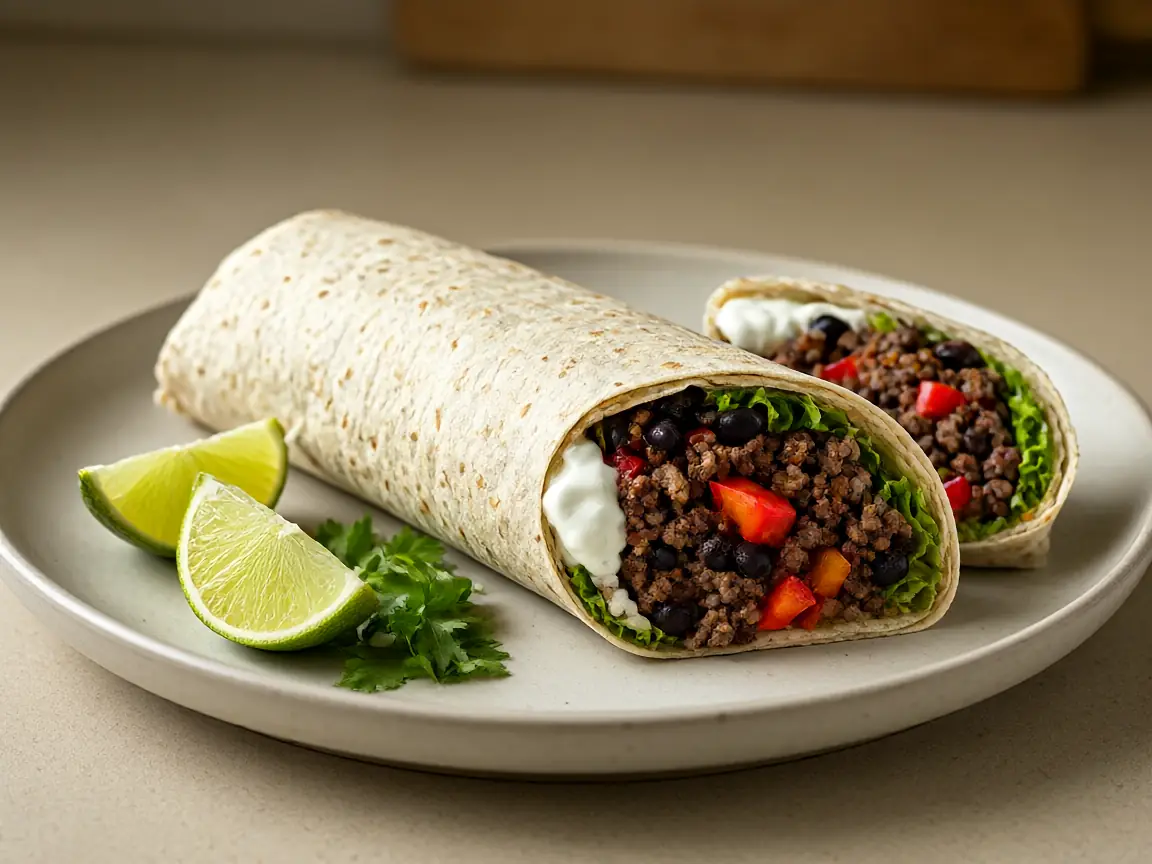
A high protein beef burrito works best when the filling is more than a pile of seasoned meat. Lean ground beef supplies a savory center, black beans add fiber and extra plant protein, peppers and onions bring moisture and sweetness, and a spoonful of lime-seasoned Greek yogurt gives the wrap a creamy finish. A measured amount of rice is optional: it can stretch the filling and make the burrito more substantial, but it is not necessary for the structure. This recipe makes four large burritos with clear portions and a filling that can also be packed separately for meal prep.
Protein and calorie totals depend on the exact beef, tortilla, cheese, beans, yogurt, and serving size. Check labels and weigh ingredients if you need a reliable estimate; a large tortilla or generous cheese portion can change the result considerably. The recipe is general food guidance, not a medical nutrition plan. Choose the tortilla and toppings that suit your preferences and dietary requirements.
Ingredients for four burritos
Use 1 pound lean ground beef, 1 small yellow onion finely diced, 1 red or green bell pepper diced, 2 cloves garlic minced, 1 teaspoon ground cumin, 1 teaspoon mild chili powder, 1/2 teaspoon smoked paprika, and salt and black pepper to taste. Add 1 cup canned black beans, drained and rinsed, 1/2 cup thick salsa, 1 cup shredded lettuce, 1/2 cup plain Greek yogurt, juice from half a lime, and four large whole-wheat or regular flour tortillas. Optional additions are 1/2 cup shredded cheese, chopped cilantro, sliced jalapeño, or 1/2 cup cooked rice divided across the burritos.
The lean beef is the main protein ingredient, while beans and Greek yogurt add more protein to the filling. Use a tortilla large enough to fold without tearing. Whole-wheat tortillas vary in size and flexibility, and some contain more fiber than others, so check the package rather than assuming every product is identical. If cooking for someone with an allergy or intolerance, check tortilla and salsa labels and avoid cross-contact with shared utensils.
Prepare the filling
Heat a large skillet over medium heat. If the pan is not nonstick, add a small amount of oil; otherwise begin with the beef and let its fat render. Add the ground beef and break it into small pieces with a spatula. Cook, stirring occasionally, until no pink remains and the beef reaches 160°F (71°C) measured with a food thermometer. FoodSafety.gov lists 160°F as the safe minimum internal temperature for ground meat. Drain excess fat if needed, leaving enough moisture to keep the filling from becoming dry.
Add the onion and bell pepper to the skillet. Cook for several minutes until the onion softens and the pepper is tender but still has a little bite. Stir in garlic, cumin, chili powder, smoked paprika, salt, and black pepper. Cook briefly until fragrant, taking care not to scorch the garlic. Fold in the rinsed black beans and salsa, then warm the mixture until steaming. If the filling looks wet, simmer uncovered for another minute or two; if it looks dry, stir in a spoonful of water or salsa.
While the beef cooks, stir the Greek yogurt with lime juice and a pinch of salt. Taste and add more lime if you prefer a brighter sauce. Keep the yogurt cold until assembly. Shred the lettuce and set out the optional cheese, cilantro, jalapeño, and cooked rice. Preparing the cold toppings before filling the tortillas makes assembly quicker and helps keep the hot skillet mixture from cooling while you search for ingredients.
Warm the tortillas briefly in a dry skillet or microwave according to package directions. A warm tortilla folds more easily and is less likely to split at the seam. Keep warmed tortillas covered with a clean towel while assembling the others. Avoid overfilling: the burrito should close with a little overlap instead of bulging at the center.
Assemble and fold a burrito that stays closed
Lay a tortilla flat. If using rice, place a small spoonful just below the center. Add one quarter of the beef-and-bean filling, keeping it in a compact horizontal line. Top with lettuce, a small amount of cheese if desired, cilantro, and a spoonful of lime yogurt. Leave a generous border around the sides and bottom. Fold the left and right sides inward, fold the bottom edge over the filling, and roll away from you while tucking the filling in gently.
For a sealed finish, place the burrito seam-side down in a warm skillet for about a minute, then turn it once. This step is optional but helps the tortilla hold its shape. Do not press too hard or the filling may squeeze out. If preparing burritos for later, consider packing lettuce and yogurt separately; cold toppings stay fresher and the tortilla is less likely to become soggy.
Cut each burrito in half only when serving. A sharp serrated knife can make a neat cross-section without compressing the tortilla. Serve with extra salsa, lime wedges, or a simple side salad. Because the filling is seasoned rather than very spicy, diners can adjust heat at the table with jalapeños or hot sauce.
Recipe snapshot
- Yield: 4 large burritos
- Active preparation: about 15 minutes
- Cooking: about 15 minutes
- Main texture: savory, moist filling with tender vegetables and creamy yogurt sauce
- Optional component: cooked rice, cheese, or extra vegetables
Times are estimates and depend on skillet size, stove strength, and how quickly vegetables are diced. Use a thermometer for the ground beef rather than relying only on color. The ingredient quantities make four generous portions, but exact nutrition should be calculated from the products and amounts you actually use.
How to adjust the filling
For more vegetables
Add diced zucchini, mushrooms, corn, or extra peppers to the skillet. Cook watery vegetables until their liquid evaporates before adding salsa, otherwise the burrito can become difficult to roll. Finely shredded cabbage can be used in place of some lettuce; add it near the end if you want it to retain crunch. Adjust the salt after adding vegetables because they can dilute the seasoning.
For a milder burrito
Choose mild salsa and omit jalapeño. Cumin, paprika, garlic, and lime provide flavor without requiring much heat. If serving a mixed group, keep hot sauce on the side so each person can choose their own level. A pinch of sugar is usually unnecessary; if tomatoes taste sharp, add a little more yogurt or a small amount of cooked onion to round the flavor.
For a different texture
Keep the beans whole for distinct bites, or mash a few into the hot beef mixture to make the filling more cohesive. A small amount of rice makes the center softer and more filling, while extra lettuce adds a fresh contrast. If the mixture is too loose, simmer it uncovered before assembly. If it is too dry, add salsa or water a tablespoon at a time.
Making the burrito ahead
For meal prep, cook the beef-and-bean filling and cool it in a shallow container. Refrigerate promptly rather than leaving it at room temperature for an extended period. FoodSafety.gov recommends refrigeration within two hours and a refrigerator temperature at or below 40°F (4°C). Store the cold yogurt sauce separately. Assemble a burrito shortly before eating, or wrap a filled burrito without lettuce and yogurt, refrigerate it, and add the cold components after reheating.
Cooked meat leftovers generally keep three to four days in a refrigerator at 40°F (4°C) or below according to the FoodSafety.gov cold-storage chart. Label the container with the preparation date and discard food that has been stored too long or handled unsafely. Do not use smell alone to decide whether leftovers are safe. For longer storage, freeze the cooled filling in meal-sized portions and thaw it in the refrigerator before reheating.
To pack a burrito, let the hot filling cool enough that steam is no longer trapped inside the wrap, then assemble and refrigerate it promptly. Keep lettuce, yogurt, and other cold toppings in a separate small container. An insulated lunch bag with a cold source is appropriate when a refrigerator is not available. The tortilla may soften as it sits, so a bowl-style packed lunch can be a better choice if texture matters more than portability.
Reheating without drying the beef
For best texture, reheat the filling separately in a skillet with a spoonful of water or salsa. Stir until steaming, then add it to a warmed tortilla with fresh lettuce and yogurt. If reheating an assembled burrito, remove lettuce and cold sauce first. Wrap the burrito loosely in a damp paper towel for microwave reheating, checking in short intervals and rotating it so the center heats evenly. Microwave power and burrito thickness vary.
FoodSafety.gov recommends reheating leftovers to 165°F (74°C). Use a food thermometer when practical, especially for a thick, chilled burrito where the center may remain cool while the tortilla feels hot. Let the burrito stand briefly after heating, then check the center before eating. Avoid repeatedly cooling and reheating the same portion; reheat only what you plan to serve.
A skillet can restore some surface texture after microwave heating. Warm the burrito seam-side down over medium-low heat, turn carefully, and stop once the tortilla is lightly toasted. If the tortilla browns before the filling is hot, lower the heat or warm the filling separately next time. The goal is even reheating, not a crisp shell that hides a cold center.
Portion and nutrition notes
Beef cut, fat percentage, tortilla size, cheese, rice, and yogurt all affect the final nutrition. A burrito made with a large tortilla and extra cheese will differ from one with a smaller wrap and more vegetables. To estimate values, use the nutrition labels from the exact packages, weigh the beef and toppings, and divide the batch into four similar servings. Restaurant-size burritos are often much larger than a home portion, so serving size matters.
Protein comes primarily from the beef, with additional contributions from beans, tortilla, and yogurt. The amount per burrito cannot be stated accurately without exact products and portions. If a target is medically important, work with a registered dietitian or clinician who can account for your individual needs. The recipe is general cooking information and does not promise weight loss or a specific health outcome.
Beans add a soft texture and make the filling go further. If you are not used to eating beans, begin with a comfortable portion and adjust to your own tolerance. Rinsing canned beans helps remove packing liquid and excess surface starch. Choose low-sodium beans if you prefer, then season the skillet to taste rather than adding salt automatically.
For other portioned meal ideas, see our high-protein meal example and browse the recipe collection. The protein foods section discusses ingredient choices, while our breakfast burrito meal-prep guide covers a different make-ahead format.
Common problems and how to fix them
The tortilla tears
A cold tortilla is less flexible, and too much filling strains the seam. Warm the tortilla briefly before rolling, use a larger size, and keep the filling in a narrow strip. If a tortilla is already torn, wrap it in a second tortilla or serve the components as a bowl rather than forcing a tight roll.
The filling is watery
Salsa, vegetables, or beans may release liquid. Simmer the filling uncovered until excess moisture evaporates. Drain and rinse beans well, and do not add cold yogurt to the hot skillet. Keep the sauce for assembly. A watery filling can make the tortilla soggy and difficult to pack.
The beef tastes bland
Season in layers: salt the beef lightly, add spices after the vegetables soften, and taste again after stirring in salsa and beans. Acid from lime can sharpen flavor without adding more chili. If the salsa is salty, use less added salt. Seasoning is easier to correct before assembly than inside a tightly wrapped burrito.
The burrito is hard to reheat evenly
A thick wrap heats slowly in the center. Reheat the filling separately when possible, or use short microwave intervals and turn the burrito between them. Remove lettuce and yogurt before heating. Check the center temperature rather than assuming a hot exterior means the whole portion is ready.
Simple variations
For a bowl instead of a wrap, serve the beef and beans over shredded lettuce or rice with the lime yogurt on top. For a smoky variation, add smoked paprika and charred corn. For a fresher version, use pico de gallo and extra lime. For more heat, add chipotle or pickled jalapeños. Keep the amount modest the first time because salsa and chili products vary in strength.
Ground turkey can replace beef, but its safe cooking temperature differs; use a thermometer and follow authoritative poultry guidance. Shredded cooked beef is another option, although its fat and sodium depend on how it was prepared. A vegetarian burrito can be built with beans and grilled vegetables, but it is a different recipe and the protein calculation will change.
If you want a breakfast version, scrambled eggs can be added, but that changes both the filling and food-safety handling. Keep cold ingredients separate and refrigerate leftovers promptly. For the straightforward beef recipe here, focus on cooking the ground meat safely, balancing the filling moisture, and folding the tortilla without overstuffing.
Frequently asked questions
Can I make the beef burrito without beans?
Yes. Omit the beans and add extra peppers or a little rice if desired. The filling will have a different texture and nutrition profile. You may want to reduce the salsa slightly so the mixture stays easy to wrap.
Can I use leaner or fattier beef?
Yes. Leaner beef may need a small amount of oil or salsa to keep the filling moist. Fattier beef may need draining after cooking. Check the package label and cook ground beef to 160°F (71°C).
Can I freeze assembled burritos?
You can freeze the cooked beef filling or fully assembled burritos without lettuce and yogurt. Wrap tightly and thaw in the refrigerator for better texture. Add cold toppings after reheating. Follow safe cooling and storage practices and do not leave perishable food at room temperature for extended periods.
How many grams of protein does one burrito contain?
It depends on the exact beef, tortilla, beans, yogurt, and portion sizes. Use product labels and weighed ingredients to calculate the batch, then divide by four only if the burritos are portioned evenly.
What can I serve with it?
A simple salad, sliced vegetables, or fruit can accompany the burrito. The best side depends on appetite and preference. The burrito can also be served on its own as a portable lunch.
Recipe recap
Brown lean ground beef, verify it reaches 160°F (71°C), soften onion and pepper in the skillet, then season and warm with rinsed black beans and salsa. Mix Greek yogurt with lime for a cool sauce. Fill four warmed tortillas without overloading them, fold securely, and toast seam-side down if desired. Keep cold toppings separate for meal prep, refrigerate promptly, and estimate nutrition from the actual labels and portions. This straightforward method makes a savory high-protein beef burrito that is adaptable without relying on unmeasured claims.