What high-protein meals can—and cannot—do for body recomposition
Body recomposition is a broad term for gradually changing the balance of fat and lean tissue. It is not a special outcome produced by one ingredient, one meal, or a short menu. High-protein meals can make it easier to include protein consistently while also eating vegetables, fruit, grains, beans, and fats that make meals enjoyable. Resistance training, recovery, sleep, health history, and the overall pattern of eating matter too. This guide focuses on practical meal ideas and preparation choices, not a personalized calorie or protein prescription.
A useful meal has a recognizable protein anchor, a satisfying source of carbohydrate or another energy-containing food, produce for color and variety, and enough flavor to make it worth repeating. The portions below are examples, not targets. Appetite, body size, training, culture, budget, allergies, and medical needs differ. If you need a specific plan, especially during pregnancy or with a kidney, metabolic, digestive, or other medical condition, work with a qualified clinician or registered dietitian.
The simplest starting point is to choose a few meals you already like and make their protein source easier to see. That might mean adding eggs to a grain bowl, using beans alongside tofu, keeping yogurt available for breakfast, or preparing chicken for several lunches. It does not require replacing every familiar food or buying supplements. A repeatable structure usually helps more than a perfect-looking menu that is difficult to shop for or cook.
Build a plate from four flexible parts
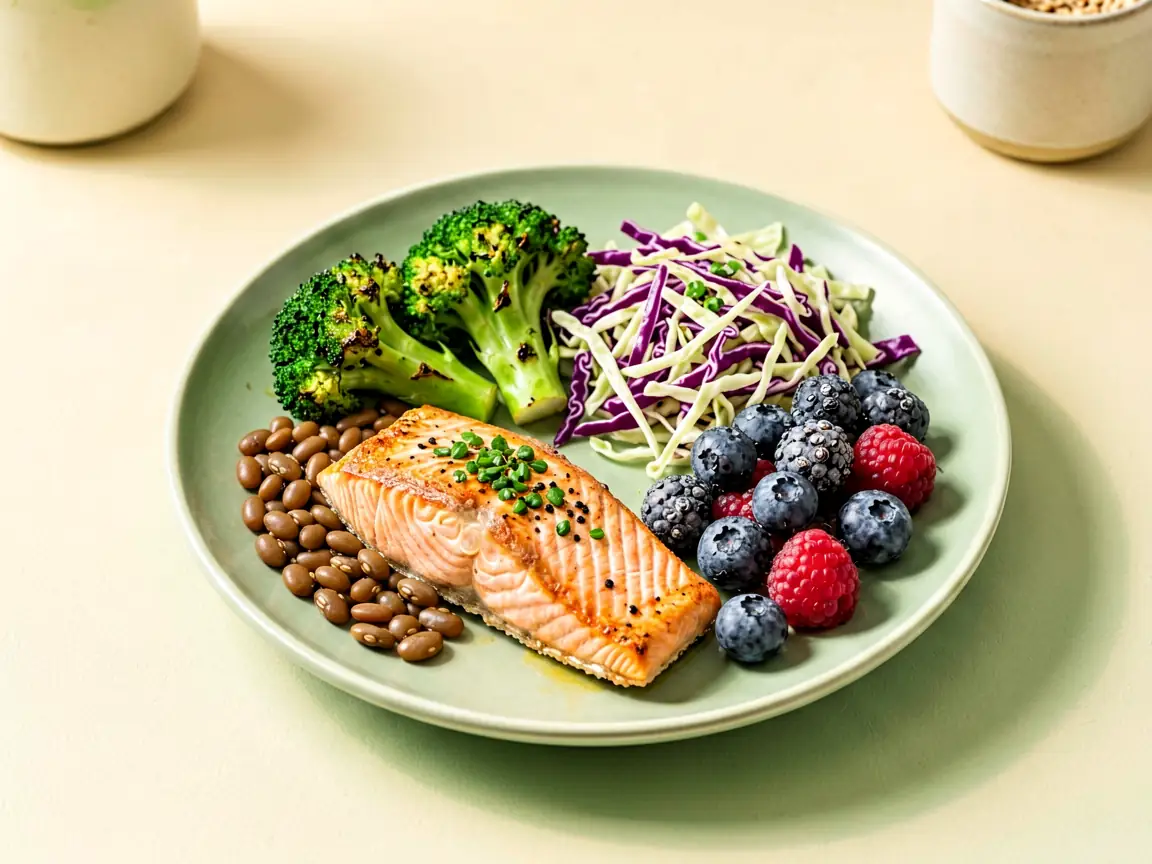
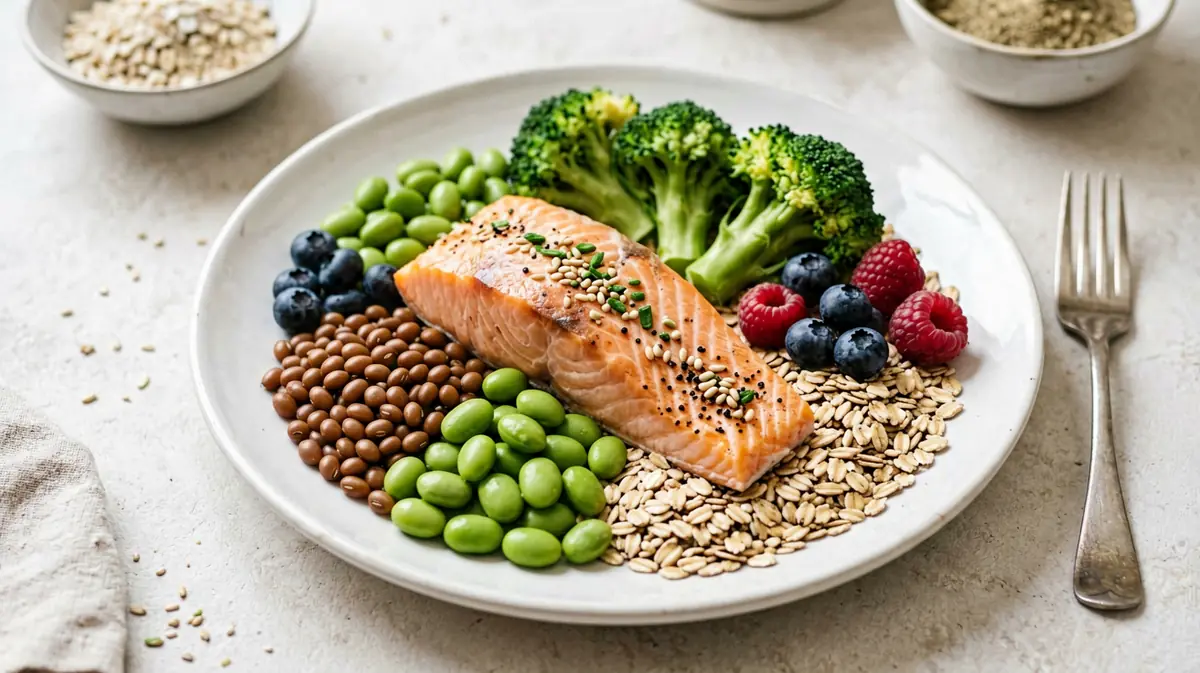
Instead of memorizing a rigid formula, think in roles. First choose a protein food that fits the meal: eggs, fish, poultry, lean meat, tofu, tempeh, beans, lentils, cottage cheese, Greek yogurt, or a combination. Next choose a carbohydrate or other substantial base such as potatoes, rice, oats, whole-grain bread, corn tortillas, or beans. Add one or two vegetables or fruits, then finish with a source of flavor and texture such as herbs, salsa, citrus, a measured dressing, seeds, or a crunchy vegetable.
These roles are interchangeable. A rice bowl can become a potato plate; chicken can be replaced by tofu or beans; raw vegetables can be roasted if they travel better that way. A swap works best when it preserves what the original food contributed. If you remove a creamy sauce, add another source of moisture. If you replace a soft ingredient with a crisp one, consider when to pack it so it stays crisp. Small adjustments can keep a familiar meal satisfying without demanding an entirely new recipe.
There is no requirement for every meal to contain the same amount of protein. Daily needs and meal patterns differ, and the right distribution is personal. Some people prefer three substantial meals; others eat smaller meals and snacks. The practical question is whether your normal routine gives you several comfortable opportunities to include protein-rich foods without forcing meals when you are not hungry.
Example meal one: chicken, rice, and roasted vegetable bowl
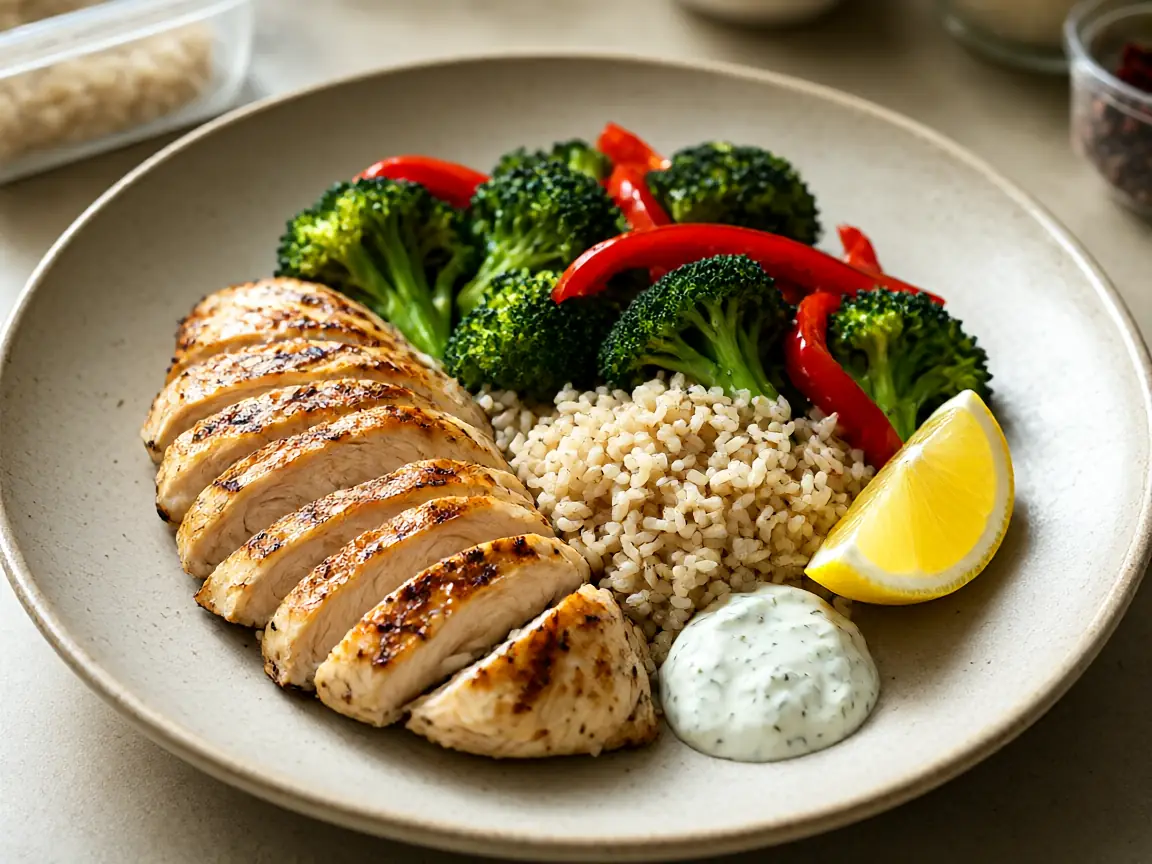
For a straightforward lunch, combine cooked chicken with rice, roasted broccoli or peppers, and a lemon-yogurt sauce. Start with ingredients you enjoy and portions that fit your appetite. Season the chicken with pepper, garlic, paprika, or a spice blend; roast or pan-cook it until safely done. Prepare rice according to its package directions, and roast vegetables with a little oil until tender at the edges. Stir lemon juice and herbs into plain yogurt for a quick sauce.
For meal prep, keep the sauce and any crisp toppings in a separate container. A divided lunch box can keep components from becoming soggy. If you are cooking for several days, cool and refrigerate the cooked components promptly, use shallow containers, and follow current local food-safety guidance for storage and reheating. Prepare only the quantity you can safely store and use. The bowl is a template, not a promise of a specific calorie or protein number: the amount depends on the ingredient brands, cooked weights, and serving size.
Example meal two: tofu, edamame, and noodle stir-fry
A plant-based option can use firm tofu, edamame, noodles, and vegetables such as cabbage, carrots, or snap peas. Press tofu if the package calls for it, pat it dry, and brown it in a wide pan. Add vegetables in an order that lets firm pieces cook before delicate leaves. Toss with noodles and a sauce based on soy sauce or tamari, ginger, garlic, and a little acidity. Edamame can be added near the end so it heats through without breaking apart.
For a less salty meal, compare labels and season gradually rather than pouring sauce freely. For a gluten-free version, check that the noodles and sauce are suitable and avoid cross-contact if that matters for the person eating. If you do not tolerate soy, use another protein food that works for you and adjust the seasoning. A meal does not become more useful by being plant-based or animal-based alone; it should fit the person's needs, taste, and access to ingredients.
Example meal three: eggs, beans, and roasted potatoes
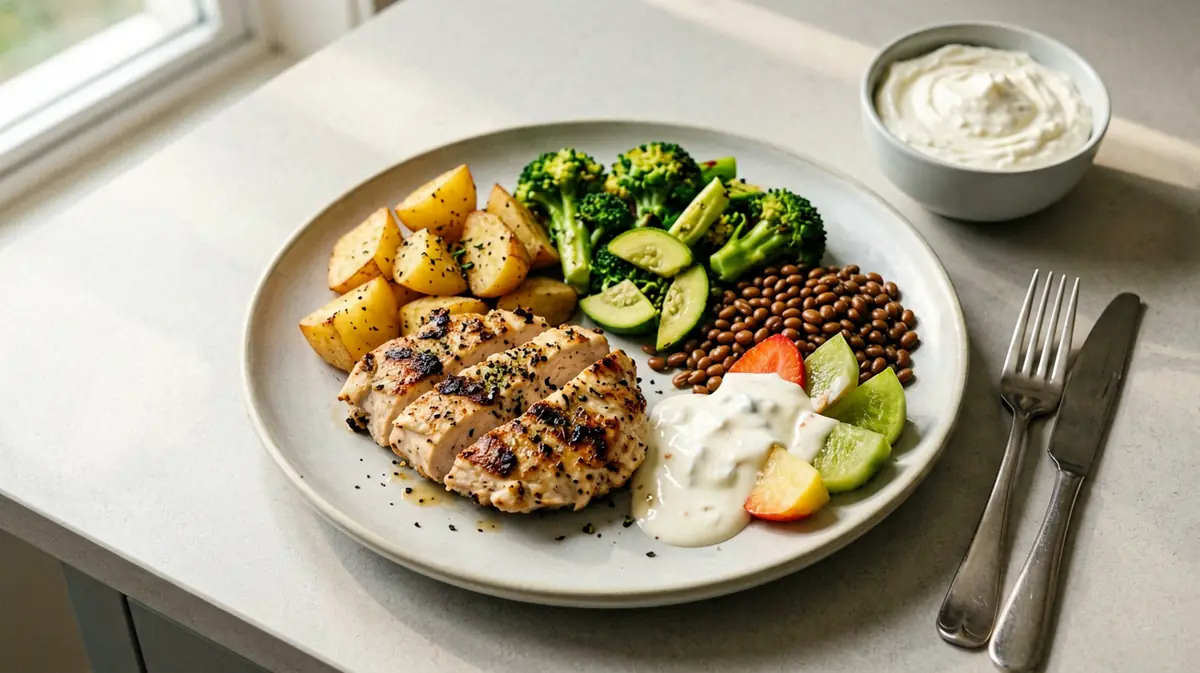
Eggs and beans make a flexible breakfast or dinner. Roast diced potatoes until browned, then serve them with eggs cooked to preference, beans warmed with cumin or smoked paprika, and a side of tomatoes or greens. A spoonful of salsa or chopped herbs adds acidity and freshness. If you are preparing several servings, store eggs and potatoes separately when that gives you a better texture after reheating.
Use canned beans for convenience or cook dried beans according to their package and safe-handling directions. Rinse canned beans if you prefer a milder flavor or want to remove some of the packing liquid, then season them yourself. The point of the meal is not to turn breakfast into a strict fitness ritual. It is one example of combining everyday foods in a way that feels filling and easy to repeat.
Example meal four: yogurt, oats, berries, and nuts
For a no-cook breakfast, layer plain Greek yogurt with oats, berries, and a small portion of nuts or seeds. Stir it together the night before for a softer texture, or pack the oats separately if you prefer them chewy. Frozen berries can thaw overnight in the refrigerator and add juice to the bowl. Use a sweetener only if you want it; vanilla, cinnamon, citrus zest, or ripe fruit can also add flavor.
This format is easy to adapt. Cottage cheese may work in place of yogurt if you like its texture. People avoiding dairy can select a suitable alternative, but protein content differs substantially across products, so read the package rather than assuming they are equivalent. Nuts and seeds add crunch and flavor; they are optional, not a mandatory protein booster. If allergies are involved, check package statements and prevent cross-contact.
How much protein belongs in a meal?
There is no single meal-level protein number that suits everyone pursuing body recomposition. Research on exercise and protein often examines total daily intake, training status, age, and study population; it does not mean every reader should copy one number. A systematic review and meta-analysis found that protein supplementation can modestly augment resistance-training-related gains in muscle mass and strength in healthy adults, with effects depending on overall intake and context. The authors do not establish that a supplement is necessary or that more protein guarantees a particular body composition outcome. See the systematic review on PubMed for the study details.
For many people, including a recognizable protein food at more than one meal is a manageable first step. People who prefer to track can use package labels and weighed portions as an estimate, but labels and food databases are not laboratory measurements of a home-cooked serving. If tracking causes stress, increases food preoccupation, or conflicts with a history of disordered eating, step back and seek professional support instead of treating an app target as mandatory.
Protein needs also depend on health and life stage. Kidney disease, pregnancy, age-related needs, certain treatments, and other conditions can change what is appropriate. Do not use a general article to diagnose a deficiency, change medication, or set a therapeutic diet. A registered dietitian or clinician can interpret research alongside your health history, labs, preferences, and budget.
Protein timing without a narrow eating window
People often ask whether a meal must be eaten immediately after training. For most everyday planning, total diet, consistency, and a meal pattern that supports training and recovery are more practical than racing a clock. If you are hungry after exercise, a regular meal or snack with protein and carbohydrate can be convenient. If you ate beforehand and are not hungry, forcing a large meal may not be necessary. Competitive athletes or people with demanding schedules may benefit from individualized sports-nutrition advice.
Think of timing as a scheduling tool: place a meal where it makes the day easier. A packed yogurt-and-oats breakfast can help someone who has little time in the morning. A rice bowl may work after an evening session because it reheats well. A sandwich may be more realistic during a short lunch break than a cooked plate. The best timing is often the one that allows you to eat comfortably and keep your routine consistent.
Meal prep that supports training and ordinary life
Prep a few building blocks instead of cooking seven identical containers. For example, prepare one protein such as chicken or tofu, one grain or potato, two vegetables, and one sauce. Combine them differently during the week: a warm bowl one day, a wrap another day, and a salad with a cooked topping later. This reduces repetition and allows portions to respond to appetite. For more detailed planning ideas, see the site's high-protein meal-prep system.
Make a short shopping list based on actual meals. Check the refrigerator and pantry first, then buy only the missing ingredients. Frozen vegetables, canned beans, eggs, yogurt, oats, rice, and canned fish can be useful backups because they reduce dependence on a single long cooking session. Keep a quick option for days when training, work, family responsibilities, or fatigue disrupt the plan. A realistic fallback is more valuable than a perfect meal schedule that breaks at the first change.
For texture, pack wet ingredients separately and add crunchy toppings just before eating. Keep sauces in small leakproof containers and label leftovers with the preparation date. Reheat according to local food-safety advice and the food's characteristics; do not assume appearance alone can determine safety. If you are uncertain whether leftovers were stored correctly, use conservative food-safety guidance rather than taking a risk.
Adjust meals for a calorie deficit without making them joyless
Some people pursuing body recomposition also aim to reduce body fat, but the appropriate energy intake is individual and cannot be calculated from this article. If a clinician or dietitian recommends an energy deficit, start by preserving foods and routines that make the plan sustainable. Choose a protein source you enjoy, add vegetables or fruit you actually eat, and use satisfying portions of grains, potatoes, beans, or other foods rather than trying to eliminate entire food groups without a reason.
It can help to notice patterns before changing portions: whether meals leave you comfortably satisfied, whether hunger is manageable, and whether training and daily functioning remain supported. Avoid extreme restriction, rapid weight-loss promises, or using exercise to compensate for eating. A plan that creates persistent fatigue, dizziness, distress, or obsessive thoughts deserves attention from a qualified professional. Health is broader than a scale reading or a body-composition estimate.
When a meal feels too large, consider smaller portions more often or save part for later. When it feels unsatisfying, add flavor, texture, or a side that fits your needs rather than automatically increasing a protein supplement. A lower-energy meal can still be enjoyable, and a higher-energy meal can still fit an overall pattern. There is no moral value attached to either choice.
Training and recovery belong alongside food
Meals alone cannot provide the progressive challenge that resistance training supplies. A qualified coach or clinician can help tailor exercise to your experience, injuries, access to equipment, and health status. Beginners often benefit from a manageable routine that practices major movement patterns and can be performed consistently. Rest days, sleep, and gradual progression matter. Avoid adding a demanding program simply because an article uses the phrase body recomposition.
Food can support the broader routine by making regular meals convenient. If a workout is late, prepare dinner components ahead so a nourishing option is ready afterward. If training happens early, choose a pre-session meal or snack based on comfort and preference. Hydration needs vary with climate, activity, and individual circumstances; use thirst and professional guidance rather than forcing excessive fluid. No single meal guarantees muscle gain or fat loss.
How to review progress without overreacting to one measurement
Body-composition estimates from home scales, photographs, measurements, or short-term weight changes can be imprecise. Hydration, recent meals, menstrual cycles, glycogen, and measurement technique can affect readings. If progress tracking is appropriate for you, use consistent conditions and look at trends over time rather than treating a single reading as a verdict. Strength, energy, sleep, comfort, and how consistently you can follow the routine may also provide useful context.
Some people find measurement emotionally harmful or triggering. You do not need to track weight or body measurements to eat well or train. A dietitian, clinician, or mental-health professional can help choose a safer way to assess goals. If your eating or exercise starts to feel compulsive, or if you experience persistent distress, prioritize support over tighter tracking.
Common mistakes when building high-protein meals
Making every meal a supplement delivery system
Protein powder and fortified products can be convenient, but they are not compulsory. Ordinary foods can provide protein and contribute flavor, texture, and other nutrients. Compare the label, serving size, cost, ingredients, and how the product fits your preferences. If you use a supplement because it is convenient, treat it as one option rather than the definition of a successful meal.
Forgetting the rest of the plate
A plate made only of lean protein may be difficult to enjoy or sustain. Carbohydrates can support training and provide familiar foods; vegetables and fruit add color and variety; fats contribute flavor and texture. The proportions should fit your appetite and needs, not a rigid picture of a “perfect” plate.
Changing too many ingredients at once
If a meal is bland, dry, or hard to pack, change one feature at a time. Add an acidic dressing, switch the cooking method, or keep sauce separate. When five ingredients change together, you cannot tell which adjustment helped. Record simple notes so a meal you like becomes easy to repeat.
Confusing a high-protein label with an ideal meal
A packaged food can be useful, but protein content alone does not answer every question. Consider serving size, allergens, sodium, fiber, cost, taste, and convenience. A label is a starting point for comparison, not a complete judgment of health or suitability.
A simple one-day example, not a prescribed menu
One possible day could include yogurt with oats and berries for breakfast, a tofu and vegetable noodle bowl for lunch, fruit or another snack if wanted, and chicken or beans with potatoes and vegetables for dinner. Another person might prefer eggs at breakfast, a sandwich at lunch, and a fish or lentil bowl at dinner. These are illustrations of formats, not a required schedule, calorie plan, or protein target. Adjust them to culture, appetite, allergies, access, and professional advice.
If you want to turn the example into a practical plan, write down three breakfasts, three lunches, and three dinners you already enjoy. Identify the protein food in each, then add a shopping list and a fallback for busy days. Choose the dishes with ingredients that overlap, so one cooking session can support several meals. That is usually more achievable than building a week around unfamiliar recipes.
Related reading and final takeaway
For flexible meal formats, browse the high-protein recipe collection and the guide to mix-and-match protein bowls. The training-day meal guide covers another planning context, while our protein-and-fiber meal guide discusses a different set of meal-building choices. Review the site's nutrition disclaimer for the limits of general educational content.
In short, high-protein meals for body recomposition are ordinary meals planned with a dependable protein food, a satisfying base, produce, and flavors you enjoy. Use examples as adaptable starting points; keep training and recovery in view; and seek individual guidance when health circumstances or a specific target matter. The most useful plan is safe, flexible, and realistic enough to repeat.